Rapid pressure waves trigger a healing response in chronic tendon and soft-tissue injuries — plantar fasciitis, achilles tendinopathy, patellar tendinopathy, tennis elbow, golfer's elbow, rotator cuff tendinopathies, gluteal tendinopathy. Strong research base for these specific conditions, especially after other conservative care has stalled.
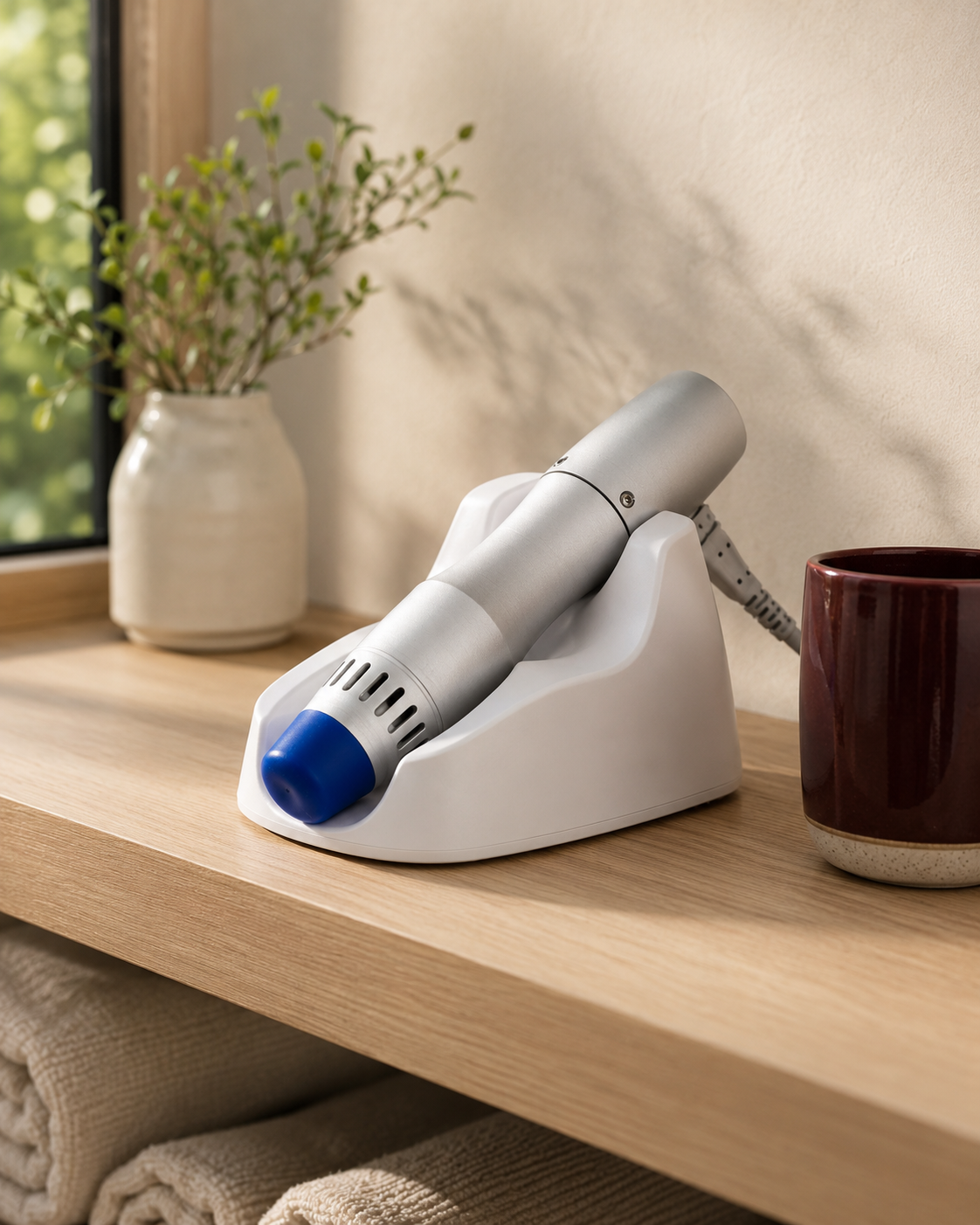
A handheld applicator generates rapid pneumatic pressure waves that disperse from the tip into the target tissue. The waves trigger a controlled inflammatory and tissue-remodeling response — increased local blood flow, fibroblast recruitment, and a kick-start to the healing cascade that's stalled in a chronic tendinopathy. Then the rehab program loads the tissue progressively so it remodels in the right direction. Both pieces matter — shockwave alone often underperforms what shockwave + rehab can do together, which is why our package includes the exercises.
Like rapid, percussive taps spread across the treatment area. Intensity is adjustable and we ramp it up to your tolerance. Most patients describe it as 'uncomfortable but tolerable' — not painful. Treatment time on the device is roughly 5–10 minutes per area.
Typical protocols call for 3–6 sessions, usually spaced about a week apart. We re-assess at fixed checkpoints — if you're improving, we taper. If you're not, we change the plan or refer.
Some patients notice changes after the first or second session. The full effect builds over the weeks following the last session — shockwave triggers a healing response that continues to develop over 6–12 weeks. Patience helps.
Most commercial insurance plans don't cover shockwave therapy. Oregon PIP (auto-injury coverage) does cover it when clinically indicated — for crash patients with strains, sprains, and tendon injuries, this is a meaningful benefit. For everyone else, it's $100 per session or $400 for a 5-treatment package that includes the initial exam, the therapy itself, and a rehab exercise program. HSAs and FSAs are typically eligible.
Different technology. Kidney-stone lithotripsy and most ED treatments use focused shockwave — high-energy waves precisely focused at depth. We use radial shockwave, which generates a pressure wave that disperses from the applicator into surface tissues. Different device, different physics, different application — both are used in medicine, but they're not interchangeable.
Yes — we screen for them at intake. Active infection in the area, certain types of tumors, untreated coagulation disorders, and pregnancy near the treatment area are typical reasons we wouldn't proceed. We'll go through the screening with you.
Yes — and it usually should be. Shockwave triggers tissue healing; rehab loads the tissue progressively to remodel correctly. The 5-treatment package is built around this — exam, therapy, and rehab exercises bundled together so you get both pieces, not just the device time.